
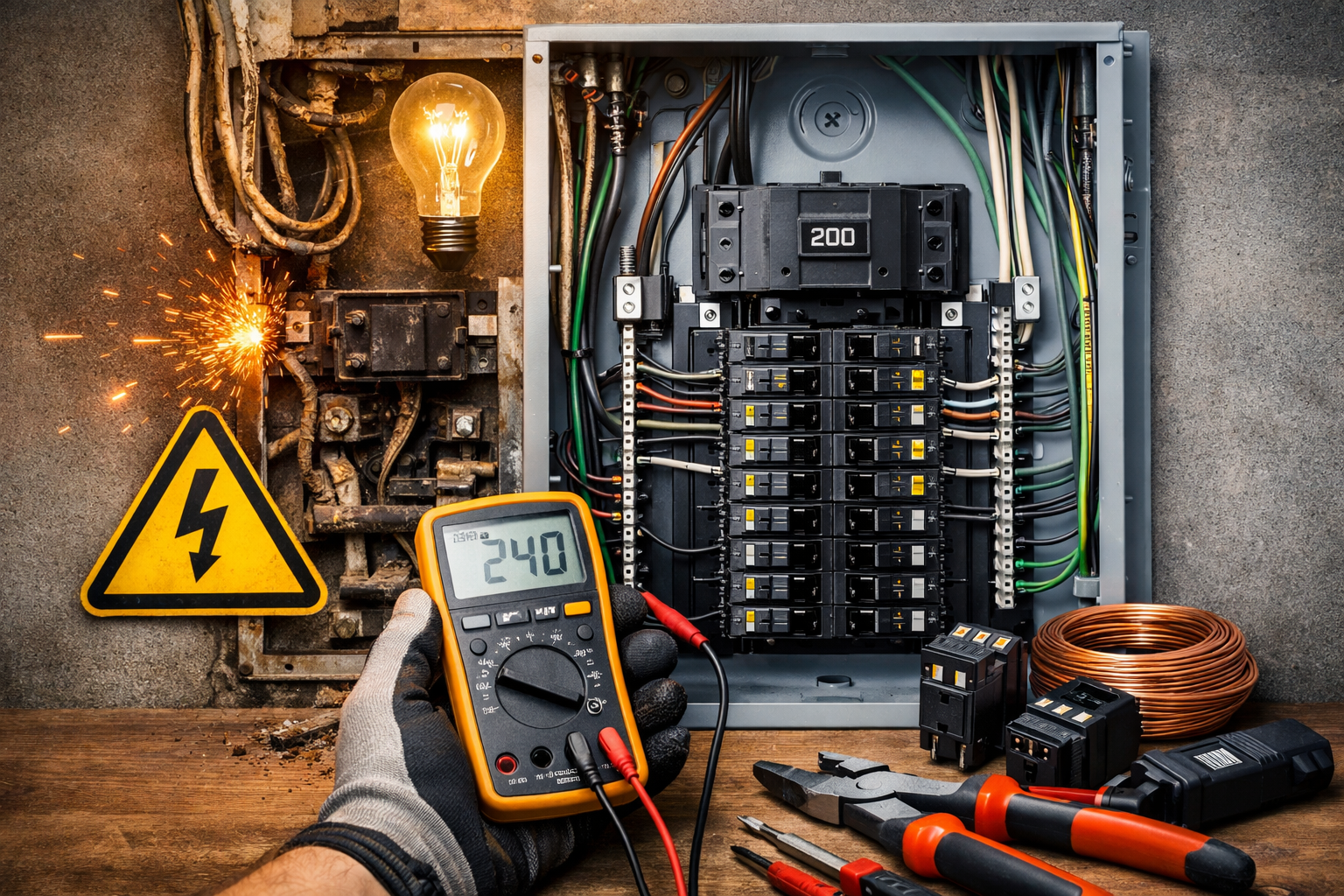
Your home’s electrical system has one true command center—the service panel, often tucked away in a basement, garage, or utility closet. While it’s easy to ignore this gray metal box for years on end, recognizing when it’s time for an electrical panel upgrade is one of the most critical safety decisions a homeowner can make. At Tried & True Electrical Services Inc., we’ve seen firsthand how outdated panels lead to flickering lights, tripped breakers, and even hidden fire hazards. Whether your home was built in the 1970s or you’re simply adding more devices than your current box can handle, understanding the warning signs, benefits, and installation process will help you make an informed choice before a small problem escalates into an emergency.
Warning Signs That Your Panel Is Begging for Help
Most residential panels are designed to last 25 to 40 years, but age isn’t the only factor. Modern households consume significantly more electricity than they did two decades ago. If you recognize any of the following symptoms, your system is likely stressed beyond its capacity.
Frequent breaker trips are the most obvious red flag. While an occasional trip is normal during a thunderstorm or when a vacuum cleaner shares a circuit with a space heater, breakers that trip weekly—or daily—indicate that the panel cannot supply enough amperage to meet demand. Similarly, flickering or dimming lights when you turn on larger appliances (like an air conditioner or microwave) suggest voltage fluctuations that a robust panel would regulate without issue.
Listen for buzzing or sizzling sounds emanating from the panel itself. This often points to loose connections or arcing, both of which generate dangerous heat. A burning smell near the electrical box is never normal and requires immediate professional attention. Visually, look for rust, corrosion, or scorch marks on the breaker face or around wiring. These are unmistakable indicators of past overheating or moisture intrusion.
Homes with two-prong outlets throughout may still rely on fuse boxes rather than modern circuit breakers. Fuse panels are obsolete and cannot safely handle the grounded, high-amperage requirements of today’s electronics. Likewise, if you own a Federal Pacific Electric (FPE) or Zinsco panel—brands known for high failure rates—replacement should be a top priority, even if the system appears functional.
The Tangible Benefits of Modernizing Your Electrical System
Investing in an electrical panel upgrade delivers immediate improvements that go far beyond simply “keeping the lights on.”
Safety is the foremost benefit. Modern panels incorporate advanced technology such as arc-fault circuit interrupters (AFCIs) and ground-fault circuit interrupters (GFCIs), which detect dangerous electrical arcs and ground faults in milliseconds—long before a traditional breaker would respond. This drastically reduces the risk of electrical fires and shock.
Increased capacity allows you to run multiple high-draw appliances simultaneously. If you’ve ever had to choose between doing laundry and running the dishwasher, a 200-amp (or larger) service eliminates that compromise. It also prepares your home for future additions such as electric vehicle charging stations, solar panel arrays, or a hot tub.
Higher property value and insurability are often overlooked. Many insurance companies either increase premiums or deny coverage for homes with outdated fuse panels or known hazardous brands. A certificate of inspection from a licensed electrician following an upgrade can lower your rates and give prospective buyers confidence. According to Energy.gov, modern electrical systems are also more energy-efficient, reducing phantom loads and improving overall power quality.
Finally, an upgraded panel supports smart home technology. Voice assistants, smart thermostats, security cameras, and Wi-Fi-enabled breakers all require stable, clean power. An antiquated panel can cause these devices to malfunction or reset unpredictably.
What to Expect During the Upgrade Process
If you’ve decided to move forward, knowing what happens on installation day will ease any anxiety. The process typically unfolds in four stages: assessment, permitting, physical replacement, and final inspection.
Assessment and Planning
A master electrician from Tried & True Electrical Services Inc. will first evaluate your current load calculation—the total amount of electricity your home uses at peak times. They will also examine the condition of your service entrance cable, grounding system, and meter socket. This step determines whether you need a simple swap (same amperage) or a full service increase (for example, from 100 amps to 200 amps).
Permitting and Utility Coordination
Electrical panel upgrades are not DIY projects; they require a permit from your local building department. Your electrician will pull the necessary permits and schedule a brief power shutdown with the utility company. In most cases, the utility must pull the meter before work begins and reseal it after the inspection passes. This coordination is seamless when handled by professionals.
Installation Day
Expect the power to be off for four to eight hours, depending on the complexity of the job. The old panel is carefully disconnected and removed. New conduits may be run if the existing ones are undersized or corroded. The new panel is mounted, grounded, and all circuits are meticulously labeled. This is also the time to relocate a panel if it is in an inconvenient or hazardous location, such as a closet or bathroom.
Inspection and Power-Up
After installation, a city or county inspector will verify that the work meets the National Electrical Code (NEC). Once approved, the utility company reinstalls the meter and restores power. Your electrician will then methodically test every circuit, outlet, and hardwired appliance to confirm everything operates correctly.
Is It Time to Make the Call?
Delaying an electrical panel upgrade is a gamble no homeowner should take. The warning signs are often subtle at first—a breaker that resets a little harder than it used to, outlets that feel warm, or a slight discoloration around the panel cover. These are not quirks; they are distress signals.
The team at Tried & True Electrical Services Inc. specializes in residential panel replacements that are efficient, code-compliant, and tailored to your family’s current and future energy needs. We handle everything from the initial load calculation to the final inspection, ensuring your home meets 21st-century electrical demands without compromise.
To learn more about whether your specific panel model is considered high-risk, read our comprehensive guide: Is Your Electrical Panel a Fire Hazard? Discover the brands that electricians warn against and what to do if you have one.
The Bottom Line
Your electrical panel is the heart of your home’s wiring. When it becomes overworked, corroded, or simply obsolete, the entire system suffers. Recognizing the warning signs—persistent breaker trips, flickering lights, buzzing sounds, or the presence of a fuse box—empowers you to act before a nuisance becomes a crisis.
A professional upgrade delivers safety, convenience, and peace of mind. It transforms your home from reactive to resilient, capable of supporting everything from remote work setups to electric vehicles. And while the investment is not insignificant, it is one of the highest-return improvements you can make, both in daily comfort and long-term property value.
If you’ve noticed any of the issues discussed in this article, don’t wait for the lights to go out completely. Contact a licensed electrician to assess your current system. With Tried & True Electrical Services Inc., you can trust that your upgrade will be performed with precision, transparency, and an unwavering commitment to safety.