

The weather in Charlotte, NC, especially during the summer months, demands a thoughtful approach to keeping homes comfortable. While air conditioning is a necessity for many residents in Mecklenburg County, relying on it alone can result in surprisingly high power bills. This is why the ceiling fan is not merely a decorative accessory; it is a critical component of any smart, efficient home cooling strategy. A ceiling fan helps not just with cooling you, it moves air that feels fresh, and it manages the humid air typical of the Piedmont region. When air moves over skin, it creates a wind-chill effect, making the room feel several degrees cooler than the actual temperature. This allows homeowners to set their thermostats higher, sometimes by four degrees or more, without noticing a change in comfort. This action directly reduces the run time of the air conditioner, leading to a noticeable drop in monthly energy costs.
This document offers essential, professional guidance on the proper selection and positioning of these important fixtures for maximum benefit. For anyone in Charlotte, NC, planning a home improvement project or building new, knowing the right fan for the right space is the first step toward significant savings. The highly skilled electricians at Tried & True Electrical Services have seen over years of service how a correctly installed fan makes all the difference in a home’s comfort level. Getting the right ceiling fan sizing from the start is very important.
Table of Contents
What is the fastest way to determine the right ceiling fan size?
The fastest and most direct way to determine the correct ceiling fan sizing involves matching the room’s square footage to the fan’s blade span. This provides a reliable formula that is easy to recall for all Charlotte homeowners. For instance, a small bedroom, which is under 75 square feet, needs a small ceiling fan with a blade span of about 36 inches. This quick calculation prevents rooms from having either weak airflow or overly strong, turbulent air movement. This simple rule is the foundation for proper fan selection, setting the stage for comfortable living.
This guide serves as an essential resource for navigating Mecklenburg County climate and building norms, helping you make expert choices. For specialized installation of ceiling fans or complex electrical changes, you might need to find expert electrical installation services in the Charlotte area to make certain everything is done safely.
Sizing the Airflow: How Do I Match the Fan Size to My Room?
Choosing the proper fan size is the most important decision for effective cooling. A fan that is too small cannot move enough air to circulate the room, and a fan that is too large can create a distracting and uncomfortable breeze. This section provides the definitive, scannable data required for making an exact match.
What size ceiling fan do I need based on room dimensions?
For homeowners considering a modern ceiling fan or a ceiling fan with remote, here is the precise sizing chart based on square footage. This information is key to achieving optimal ceiling fan sizing.
- Small Rooms (up to 75 sq ft): These spaces, like small home offices or walk-in closets, require a fan with a 29” – 36” blade span. These fans move air efficiently without taking over the space.
- Medium Rooms (75 – 144 sq ft): Most standard bedrooms fall into this category. They need a ceiling fan with a 42” – 48” span. A common choice here is a bedroom ceiling fan in the 44-inch range, offering a balance of power and proportion.
- Large Rooms (144 – 225 sq ft): This includes dining rooms and larger master bedrooms. These spaces must have a fan between 50” – 54” span to move air effectively to all corners. This prevents dead air zones in the room.
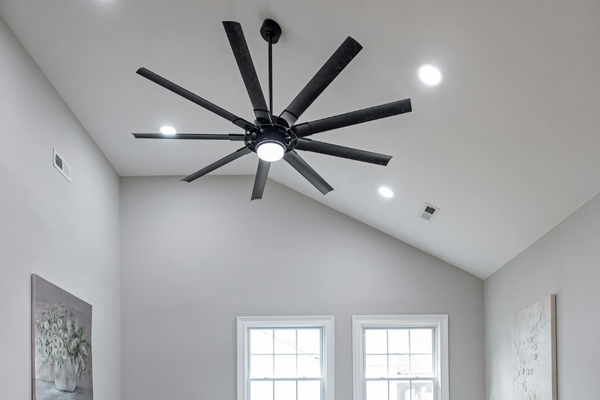
- Great Rooms/Open Concept (over 225 sq ft): For large, open areas typical of newer Charlotte homes, a single ceiling fan is rarely enough. These rooms require dual fans or a single fan with a 60”+ diameter. Careful placement is required to avoid interfering with any existing ceiling fans with lights.
Beyond the blade span, the concept of CFM (Cubic Feet per Minute) must be understood. CFM measures the air volume a fan moves at its highest speed. A high-quality ceiling fan should have a high CFM rating for its size. For instance, two 52-inch fans can have very different CFM ratings based on the motor quality and blade pitch. A fan with a powerful motor and steeper blade pitch will achieve higher CFM, translating to greater cooling ability, which is vital during a sweltering July afternoon in Charlotte.
This sizing process may seem detailed, but getting it right means years of quiet, efficient cooling. Remember that Tried & True Electrical Services recommends verifying the CFM before purchase for the best performance. Homeowners should think of the fan as an investment in comfort and energy control.
How does ceiling height affect the fan’s efficiency?
The height of a ceiling has a very strong influence on fan performance. A ceiling fan needs to move air against the ceiling and down towards the living space to create the cooling sensation.
The ideal blade clearance for any ceiling fan installation is between 7 and 9 feet from the floor. This height allows for maximum air displacement over the area where people are seated or standing. If the ceiling is lower, the airflow can feel too direct and turbulent. If the ceiling is higher, the air movement may dissipate before it reaches the floor, making the fan ineffective.
- Standard 8-Foot Ceilings: Most older and many newer Charlotte homes have 8-foot ceilings. In these situations, a flush mount or a hugger fan is the proper selection. This mounting style keeps the fan close to the ceiling to maintain the necessary 7-foot clearance.
- 9-Foot Ceilings and Higher: For these taller ceilings, a downrod is necessary. The downrod drops the ceiling fan into the proper operating range. The length of the downrod must be calculated to keep the blades between 7 and 9 feet from the floor.
Proper installation of ceiling fans is essential not just for efficiency but for safety. It is a critical factor in how well the ceiling fan works.
Indoor Placement: Optimizing Airflow for Living Spaces
Once the size is determined, the fan’s location must be considered. Good placement ensures even cooling and avoids creating annoying drafts.
Where should I position a fan for optimal air circulation in a bedroom or living room?
For the majority of indoor spaces, the fan should be positioned in the center of the room. This placement allows the airflow to spread evenly in all directions, covering the maximum floor area.
- The Center Rule: In a living room, centering the fan over the primary seating area (sofa and coffee table) is usually the best strategy. In a bedroom ceiling fan scenario, it is best to center the fan over the bed. This is where cooling is most important when occupants are resting. This approach ensures that the most used part of the room receives the direct benefit of the airflow.
- Obstruction Check: It is important to avoid placing the fan near beams, light fixtures, or large wall cabinets. Any large obstruction can block the airflow, leading to uneven or choppy air movement. A common mistake is placing a fan too close to a light source, which can create a strobe-like effect due to the moving blades.
- Directional Airflow: Charlotte residents should remember the seasonal difference in ceiling fan direction.
- Summer (Cooling): The blades should turn counter-clockwise, pushing air straight down. This is what creates the cooling breeze.
- Winter (Heat Circulation): The blades should turn clockwise at a low speed, gently pulling air up. This forces warm air trapped at the ceiling down the walls without creating a draft, helping to distribute heat more evenly.
This subtle seasonal change in ceiling fan direction makes a significant difference in comfort and heating efficiency during the cooler months in North Carolina. If you need help with electrical work or Professional lighting solutions for your home, contacting a dedicated service provider is a wise move.
Outdoor Placement: Fans for Charlotte Porches and Patios
The Piedmont climate means many Charlotte homeowners enjoy screened porches, covered patios, and outdoor kitchens. These outdoor rooms present unique ceiling fan challenges due to high humidity and weather exposure.
What type of ceiling fan is required for outdoor covered spaces?
Any fan placed outside must have a proper UL rating to resist moisture and prevent electrical hazards. Ignoring this safety requirement is a common mistake seen by professionals at Tried & True Electrical Services
- Wet-Rated vs. Damp-Rated: These terms are essential for outdoor ceiling fan selection.
- Damp-Rated: This fan is designed for covered areas, like screened porches, covered patios, and decks where the fan will not be directly rained on but will be exposed to humidity and moisture. This is the most common rating required for outdoor living spaces in Charlotte.
- Wet-Rated: This fan is completely sealed and can withstand direct rain and snow. Use this type for pergolas, open gazebos, or completely uncovered locations.
- Material Choice: The high Piedmont humidity requires fans made of weather-resistant finishes. Materials such as marine-grade bronze, stainless steel, or ABS plastic are best for resisting rust, corrosion, and warping. Standard indoor fans will quickly deteriorate in these moist conditions.
- Local Tip: An added benefit of using a powerful outdoor ceiling fan on a patio is the air movement helps keep mosquitos and other pesky flying insects away on humid summer nights. The breeze makes it harder for small insects to fly, making your outdoor enjoyment much better.
For property managers in the city, the quality of outdoor ceiling fans installed on community porches can affect resident satisfaction and long-term maintenance costs.
Utility Placement: Fans for Garages and Workshops
Garages and home workshops in Charlotte often become the hottest and most uncomfortable areas of the house, especially during the summer. Adding proper air movement can improve comfort and safety significantly.
Should I install a fan in my Charlotte home garage or workshop?
Absolutely. A ceiling fan in a garage or workshop provides crucial air circulation and ventilation that can make working in these spaces tolerable, even on the hottest days.
- Focus: The main functions here are ventilation, providing cooling for workshop activities, and quickly dissipating airborne particles or fumes from paint, glue, or vehicle exhaust. For hobbyists, a bladeless ceiling fan might be an interesting option to explore.
- Best Type: Garages often benefit most from industrial or utility-style ceiling fans with high CFM ratings. These fans are built for durability and powerful airflow rather than quiet operation or looks. They often have metal blades and a simpler design.
- Safety Note: When planning the ceiling fan installation in a garage, safety is the first priority. The blades must have enough clearance around stored items and, most importantly, must not interfere with the travel path of an open garage door or any shelving units. A low-profile mounting or very high mounting is typically required. Getting the ceiling fan installation near me done by someone who knows safety codes is important.
For any business owner needing electrical maintenance or upgrades, finding reliable commercial electrical work for your business is always a good investment.
Installation & Local Compliance
Proper ceiling fan installation is a task that carries important safety and legal considerations. An improperly hung fan is a fire risk and a major safety hazard. This is why following local Mecklenburg County codes is a must.
What mounting requirements and electrical codes apply to ceiling fans in Charlotte?
Every ceiling fan must be supported by a junction box rated for its weight and the movement it creates.
- Box Rating: It is necessary to emphasize the need for an UL-listed fan-rated electrical box. Unlike simple light fixtures, fans create constant movement and torque. A standard light fixture box is not strong enough and can fail, causing the fan to fall. Fan-rated boxes are typically rated for 35 pounds or 70 pounds, which is enough to handle the weight of heavy ceiling fans with lights and the stress of the motor running. This is a crucial safety and code compliance point that Tried & True Electrical Services always stresses.
- Permitting/Inspection: If a homeowner is installing a fan where there was no electrical box before (meaning new wiring is being run through walls or the ceiling), they might need a permit and inspection from Mecklenburg County to ensure the new electrical work meets current building codes. Consulting with a local electrical professional can clarify these requirements quickly.
- Switch Types: Modern ceiling fans often come with convenient options like a ceiling fan with remote control. Simple pull chains are still common, but many new installations include dedicated wall switches to control the light and fan speed separately. Wiring for these new switches must be correct to avoid damage to the fan motor.
The importance of correct installation of ceiling fans cannot be overstated. Contacting Tried & True Electrical Services for any questions about compliance and safe setup is always a good idea.
Conclusion: Maximizing Energy Savings in NC
The decision to purchase and install a ceiling fan is a wise one for any homeowner in Charlotte, NC. A carefully chosen and correctly placed ceiling fan provides comfort for a fraction of the cost of running central air.
The summary of the sizing importance is this: get the right size for the room for better efficiency and comfort. A well-sized fan works quietly and moves air properly, giving you the best result. The fan’s placement, whether indoors in a bedroom ceiling fan application or as an outdoor ceiling fan on a porch, should always prioritize the space where people spend the most time.
When shopping, look for the Energy Star rating. This rating signals that the fan meets strict standards for energy efficiency, meaning it uses less electricity than standard models. This commitment to efficiency is what truly matters for keeping North Carolina power bills manageable year after year. For immediate help with your next project, you can connect with us today for immediate scheduling assistance.