
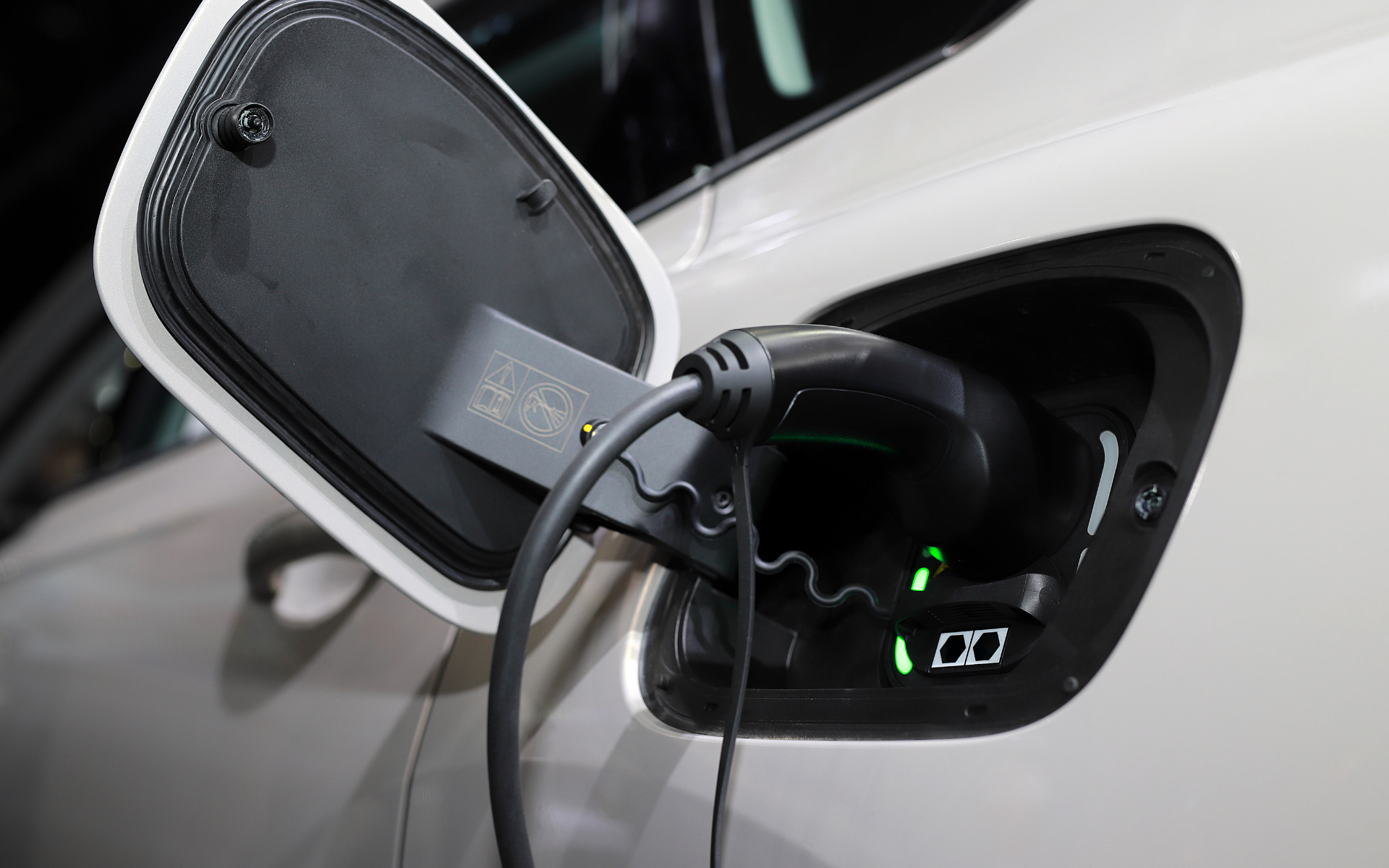
Buying a Tesla or Rivian is exciting. You drive it off the lot, loving the silence and the speed. Then, you pull into your driveway and realize a hard truth. Your detached garage only has a single lightbulb powered by a thin extension cord buried in 1995.
This is a common story. You want to charge your new car, but standard 120V outlets in old sheds can’t do the job. They are too slow. To be truly EV-Ready, you need heavy-duty power (240V) out there to get a full battery overnight.
In Charlotte, NC, we are seeing a boom in people fixing up their backyards. Neighborhoods like Plaza Midwood and NoDa are full of new workshops and Accessory Dwelling Units (ADUs). But these old properties present a specific challenge. Digging through Charlotte’s “red clay” soil to run new wires is not easy work.
We want to help you figure this out. We will walk you through the heavy lifting. We will explain the permits, the trenching, and the math needed to get your shop EV ready detached garage setup working perfectly. Tried & True Electrical Services Inc. is here to make the complex simple.
What Does It Take to Power a Detached Garage for an EV?
You might be wondering what the actual steps are. It is a big project, but it follows a clear path. To make a detached garage or shop ready for an electric vehicle in North Carolina, you typically need to complete these four phases:
- Electrical Load Calculation: We have to check if your main house panel has enough spare amps to feed the new structure.
- Permitting: You must file an electrical permit with Mecklenburg County (or your local municipality).
- Trenching & Conduit: We need to dig a trench at least 18 inches deep (for PVC) to protect the feeder wires underground.
- Subpanel Installation: We install a 60-amp to 100-amp subpanel in the garage to handle the charger and your other tools.
Navigating Mecklenburg County Permits
Let’s be blunt. You cannot legally run power to a detached structure without a permit in Charlotte. Some folks try to skip this step, but it is a bad idea.
The city and county take this very seriously. They want to know that the wire running across your yard is safe. They want to know it won’t overheat or shock anyone digging in the garden later.
If you do unpermitted work, you are taking a huge gamble. If a fire occurs, your home insurance can deny your claim. They will look for the permit. If they don’t find one, they might not pay. It is not worth losing your home’s value over paperwork.
This is where Tried & True Electrical Services Inc. steps in. We handle the diagrams. We talk to the inspectors. We schedule the visits. You do not have to stand in line at the county office. We make the regulatory part painless so you can focus on the fun part—driving your car.
Trenching in Charlotte’s Red Clay
If you have ever tried to dig a hole in a Charlotte backyard, you know the struggle. Our soil is heavy, red clay. It is hard as a rock in the summer and sticky mess in the winter.
The National Electrical Code (NEC) has strict rules for underground wires. We typically use PVC conduit to protect the wires. The code requires us to bury this conduit at least 18 inches deep. This keeps it safe from lawn aerators and gardening tools.
Safety is our top priority. Before a shovel ever hits the dirt, we call 811. This service marks your underground gas, water, and cable lines. You would be surprised what is buried in your yard. Hitting a gas line is dangerous and expensive. We never skip this step.
In established neighborhoods, we aren’t just fighting the clay. We are fighting tree roots. Big oaks and maples have roots that spread far and wide. Digging through this by hand is almost impossible. That is why subpanel installation Charlotte NC projects often require a trencher machine. This machine cuts a clean line through the clay and roots, saving time and your back.
Sizing the Subpanel
When we run power to a garage, we don’t just think about today. We think about tomorrow. You might just have one EV now, but what about five years from now?
Future Proofing Don’t just install a single circuit for the car. If you are going through the trouble of trenching for electricity, you should run enough power to do more.
Let’s look at the numbers.
- EV Chargers: These can pull anywhere from 40 to 60 amps.
- Shop Lights/Tools: A table saw or air compressor might need 20 amps.
- Mini-Split AC: If you want to work out there in July, you need AC. That is another 20 amps.
Recommendation If you only run a 50-amp line, you can’t charge the car and run the heater at the same time. You will trip the breaker constantly. That is annoying. Tried & True Electrical Services Inc. recommends installing a 100-amp subpanel. This gives you plenty of headroom. You can charge the car, run a table saw, and keep the AC blasting all at once. It turns your garage into a fully functional workspace.
Hardwired vs. Plug-in EV Chargers
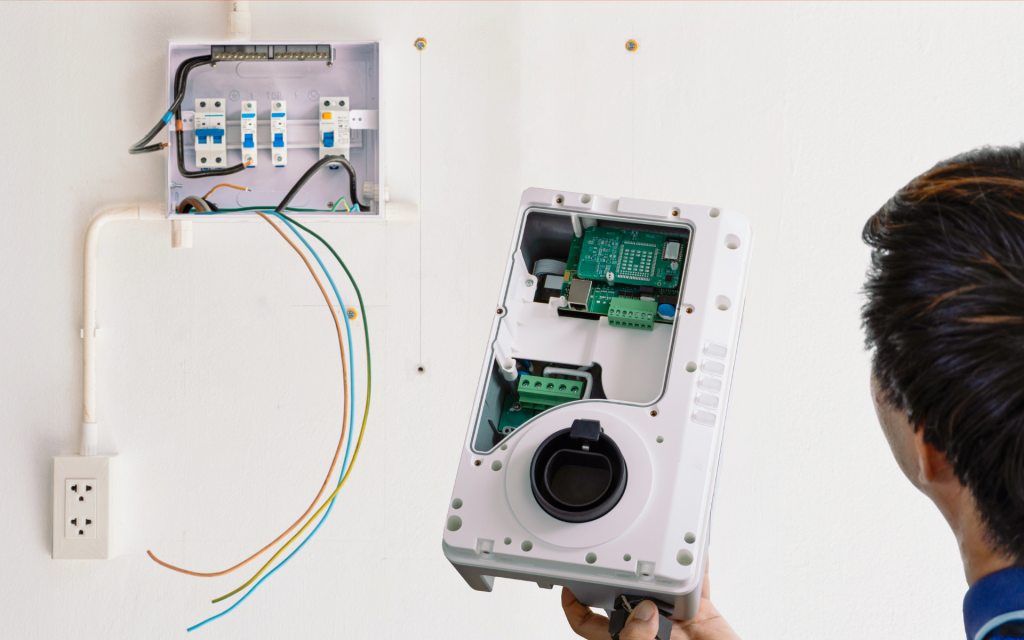
Once the power is in the garage, you have to choose how to connect your car. You can plug it in, or you can hardwire it.
For detached garages, we often recommend hardwiring the unit directly to the wall.
Garages can be damp. They can get dusty. Home ev chargers that are hardwired are usually weather-sealed. They are tighter and safer. Also, a standard plug outlet is a “weak point.” If you pull high power through a plug for hours every night, it can get hot. It can even melt if the connection isn’t perfect. Hardwiring removes this risk.
However, sometimes a plug makes sense. If you are renting, or if you plan to move soon, you might want portable ev chargers that use a NEMA 14-50 outlet. This lets you unplug the charger and take it with you. Just ask us about high-quality industrial receptacles that can handle the heat better than the cheap ones from the hardware store.
If you are looking for the best EV-Ready chargers for home use, we can help you select a model that fits your specific car and driving habits. Whether you need EV chargers installation for a Tesla Wall Connector or a generic J1772 plug, the wiring behind the wall is what matters most.
Is Your Main Panel Ready?
Before we start digging, we need to look at your main breaker panel in the house. It is the heart of your system. If the heart isn’t strong enough, the limbs won’t work.
Main Service
- Requirement: You usually need 200 Amps coming into your house to add a big load like a garage subpanel.
- The Fix: If you have an older 100-amp service, we might need to upgrade your main panel first.
Breaker Space
- Requirement: We need two open slots stacked on top of each other (a Double Pole breaker) to feed the garage.
- The Fix: If your panel is full, we can sometimes install “tandem” breakers to make room, or we can install a small subpanel at the house.
Physical Path
- Requirement: We need a clear path from the main panel to the backyard.
- The Fix: If there is a driveway or sidewalk in the way, don’t worry. We can often bore underneath concrete so we don’t have to break it up.
Distance
- Requirement: The garage should ideally be less than 150 feet from the house.
- The Fix: If it is farther, we simply use thicker wire. This prevents “voltage drop,” which is when the power gets weak over a long distance.
If you are unsure about any of this, you can contact us for a review. We can look at your specific setup and tell you exactly what is needed.
Conclusion
Adding power to a detached garage is a major upgrade. It does more than just charge your car. It adds significant property value. It opens up the possibility for a workshop, a home office, or even an apartment down the road.
Please remember, this involves high-amperage underground feeders. This is not a DIY Saturday project. You are dealing with lethal amounts of electricity and difficult digging conditions. It requires professional tools and professional knowledge.
With over years of experience, Tried & True Electrical Services Inc. has helped homeowners all over Charlotte turn their simple sheds into powerful hubs. We know the 100 amp subpanel cost, the permit fees, and the soil conditions better than anyone. We handle the hard work so you can enjoy your new electric lifestyle.
Whether you need simple lighting installation for your path or a heavy-duty system that rivals our commercial electrician work, we are ready to serve you.
Want to turn your shed into a Supercharger station? Contact Tried & True Electrical Services Inc. for a site assessment and load calculation today.